

Ana María Lorenza García Sayri Túpac de Loyola
A life between two worlds
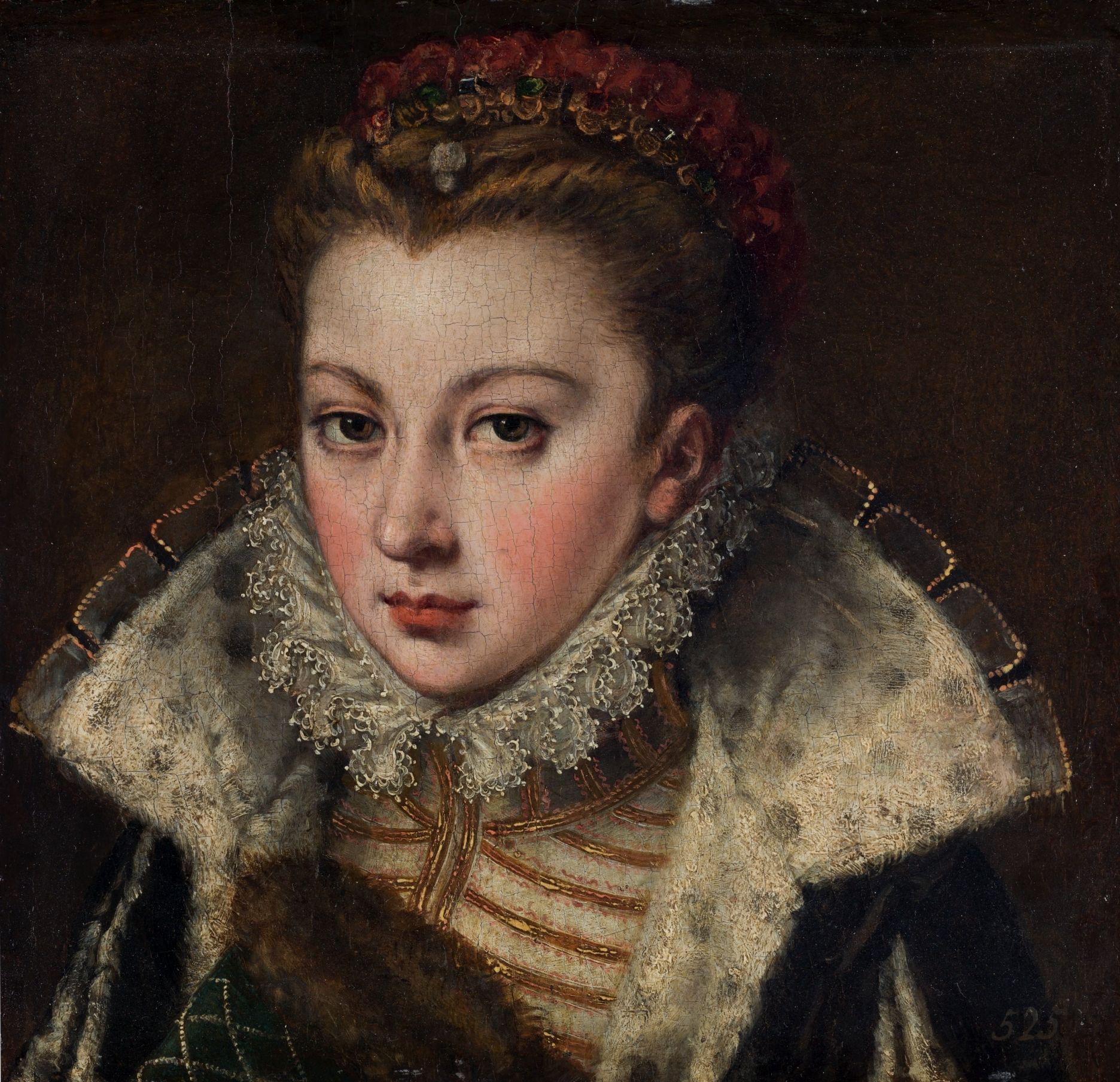
Doña Ana María, born in 1593, was a noble mestiza of Hispano-Incan descent. Her parents were the governor Martín García de Loyola and the Incan princess Beatriz Clara Coya. After becoming orphaned by both of her parents, the Viceroy of Peru carried out their will by sending her to the Iberian Peninsula, where she arrived in 1603. She settled in Valladolid, where Philip III placed her under the care of the Count of Mayalde. Upon turning 18, she married a nobleman, Juan Enríquez de Borja. The couple decided to live in Madrid, which allowed Ana María to initiate a lawsuit against the Crown, claiming the income from her Cuzco properties. A pension of 10,000 ducats was eventually agreed upon, along with the creation of a semi-autonomous fiefdom in her Yucay estates and the title of I Marquesa de Santiago de Oropesa in 1614. Shortly after, she decided to travel to Peru with her husband, as part of the Viceroy’s entourage, the Prince of Esquilache, a cousin of the couple.
Initially settled in Lima, where their children were born, they moved around 1620 to the Yucay Valley (now the Urubamba Province) to directly administer their estate. After seven years there, they decided to return to Madrid, where the marquise passed away and was buried in the Church of San Juan Bautista, in front of her house.”
Francisca Pizarro Yupanqui
First Mestiza Girl of Peru
She is considered the first mestiza of Peru. Her mother was Quispe Sisa, sister, wife (or perhaps both) of the last Inca emperor Atahualpa Yupanqui. Her father was the legendary Francisco Pizarro. She was born in Jauja in 1534, and after her father’s assassination, Francisca was likely saved from the same fate by Inés Muñoz, the conquistador’s sister-in-law, who took her and her brother Gonzalo to safety out of the turbulent Lima. She was then seven years old and the most renowned and refined mestiza girl in Peru, having received a thorough education in letters, music, and art.
The court decided that, for her safety, she should be sent to Spain, and in 1549, she was embarked on the ships of the Carrera to Spain. Once in the Iberian Peninsula, they were placed under the care of her uncle Hernando Pizarro, who soon saw in her an opportunity to increase his already substantial fortune and perpetuate the Pizarro lineage.
They married when she was 20 and he was nearly 50. Neither the age difference nor the kinship was uncommon in Europe at that time for arranged marriages. They married at the Castle of La Mota in Medina del Campo, where he was imprisoned for the murder of Diego de Almagro in Peru and for fraud against the Royal Treasury. Curiously, she remained in the castle with her imprisoned husband, from where they jointly litigated against the Crown to recover part of the fortune confiscated from the Pizarros. From there, through a large amount of correspondence, they gave instructions to their agents in Peru (and also in Spain) to make the most of their many lands, encomiendas, and various possessions.
Finally, in May 1561, Hernando was released, and the family moved to the Palace of La Zarza in Extremadura. From there, they commissioned the famous Palace of the Conquest, located in the Plaza Mayor of Trujillo, where the couple lived for several years. In 1578, Hernando died, and she became one of the wealthiest widows in the world. For the first time in her life, she could choose what to do. She wanted to be among the most notable in court, and so, she arranged two marriages: her son Francisco would marry the daughter of the Count of Puñonrostro, and she herself, in a decision that was highly controversial at the time, would marry the older brother of her daughter-in-law, Pedro Arias Portocarrero, in 1581.
Together with her new husband, she led an intense social life at court, enjoying her immense fortune and living in the greatest luxuries of Madrid, becoming the leading example of the rising mestizo nobility that was settling in Spain. She passed away in Trujillo in 1598 at the age of 63
Ysabel de Bobadilla
The Governor and Captain General of Cuba
María Álvarez de Toledo y Rojas
The Courageous Viceroy
No images of her have survived. She was born in 1490 into a powerful Castilian family and received an exquisite education. She married Diego Colón, son of the discoverer. They set sail from Cádiz in 1509 bound for Santo Domingo. There, Don Diego replaced Governor Nicolás de Ovando, who did not take kindly to this and began legal battles against the new governor.
Influenced by Doña María and her extensive humanistic training, Don Diego radically changed the previous governing methods, attempting to create a more egalitarian society. Instantly, two irreconcilable factions emerged: one of the hidalgos and their descendants, who believed they had more rights than anyone else to the encomiendas and holdings of the indigenous people, and on the other hand, the viceroys, who defended a society without privileges based on birth or arrival. Seeing how the situation was unfolding, Don Diego was called to Spain. This is where the overwhelming personality of Doña María emerged, as between 1515 and 1520, she took charge of everything, becoming the first vicereine of the new territories and fighting against everyone, even enduring the scorn directed at her. The controversial friar Bartolomé de las Casas said of her:
“Diego Colón left the port of Santo Domingo, leaving his wife Doña María de Toledo, a matron of great merit, with two daughters on this island. Meanwhile, the judges and officials were at their leisure, commanding and enjoying the island and causing some inconveniences and shameful acts to the house of the Admiral, showing no regard for many things concerning the dignity of the person and lineage of the said lady Doña María.”
During the five years of Don Diego’s absence, she could not escape the prejudices of the time, and from those who thought that, as a woman, she would not be up to the task. They were wrong. Furthermore, this determined lady sent a series of letters to her powerful and influential family, asking them to support her husband. The viceroy returned with the lawsuit won in 1520, but the situation in the governorship was not improving. In 1523, Charles I suspended him from his duties and forced him to return to Spain, where he continued fighting for his rights, but he died in 1526. Once again, from the other side of the world, the combative figure of Doña María emerged, this time fighting for the rights of her firstborn, Luis Colón y Álvarez de Toledo.
Back in Seville, using her great influence, personal skills, and robust education, she wrote letters to Emperor Charles and his wife, this time fighting for the rights of her children. After achieving this, the brave Doña María returned to the Indies. She passed away in the Alcázar of Santo Domingo in 1549. She was one of the highest-ranking women ever to pass through and step foot in the Indies.
Inés Muñoz de Ribera
The Peasant Who Built an Empire
Catalina Suárez de Marcayda
Detective Fiction in Mexico
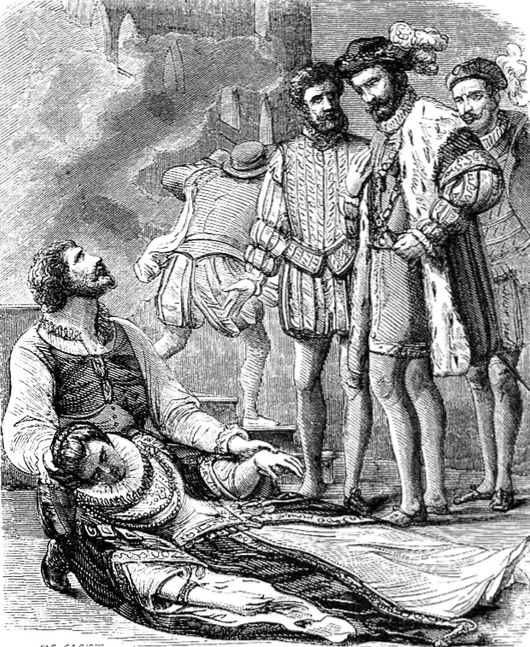
In 1511, she married Hernán Cortés in Cuba, who soon embarked on the expedition that would lead him to immortality, leaving his wife behind on the island.
Once Tenochtitlan was conquered, the man from Extremadura sent for her. The reason why Doña Catalina did not accompany her husband on this perilous venture remains unknown, as there were indeed Castilian women present during the conquest of Tenochtitlan. Was he protecting her because he loved her? Or did he not love her and found her a hindrance? Did she suffer from an illness that prevented her from undertaking such a terrifying journey? The chronicles suggest the latter, but we will never know for certain. The book Noticias históricas de la Nueva España, contemporary to the events, states the following:
“Once Don Hernando Cortés was in his quietude… he awaited for hours his wife, Doña Catalina Suárez, whom he had sent for; and after many days of waiting with this hope, news arrived to the Marquis that his wife was at the Port… He sent some captains with gifts to receive her and bring her to Mexico… and they gave her a grand reception with many festivities… There she stayed with her husband, the Marquis of the Valley, and after many days… (she was very ill with the mal de la madre)… one night, after being very joyful… and going to bed happily together, in the middle of the night, she suffered a cruel stomach pain, followed by the mal de la madre, and when they tried to find a remedy, it was too late, and so her soul departed to God
The “mal de madre” mentioned here refers to what, in Spanish medieval or Golden Age literature, was called any illness related to the pain of the uterus or ovaries. It even appears in a famous text like La Celestina. The story continues as follows:
“Since in this miserable world there are always new things to discuss and ways to show ill intentions, on this occasion, some allegations were made against the Marquis, saying that that night… husband and wife had argued, and that he had killed her… This was a great evil, raised by wicked men, who have paid or are paying for it in the next world… She died as I have said, and the Marquis was not to blame, and he made amends for it with the sorrow he showed, for he loved her very dearly…
The late woman’s mother legally accused Cortés of strangling her and demanded compensation. In the trial, one of the deceased’s attendants testified that, alerted by some noises, she entered the room and saw her mistress lifeless on Cortés’ arm. The bed was wet, she had marks on her neck, and a broken necklace. Another witness stated that the corpse’s eyes were wide open, “stiff and bulging out, like someone who had drowned.”
Was it a dispute? A natural death? Was it jealousy from Doña Marina, the legendary Malinche, who was already expecting a child from Cortés? We will never know.
Inés Escobar
The first "resort" in the Caribbean
In 1512, Inés de Escobar was the only known Castilian in Santa María la Antigua del Darién (in the north of present-day Colombia), where she managed a rudimentary inn. Not only was she the first known European to set foot on the isthmus, but without a doubt, she was also the first innkeeper between Central America and Tierra del Fuego. Her husband, Juan de Caicedo, was a royal official who returned to the Peninsula to protest before the king after the execution of Balboa by Pedrarias Dávila, the new governor of those lands known as Castilla del Oro. He never returned, as he fell ill and died in Seville. When King Ferdinand learned of his official’s death, he sought to reward his service. He advised Pedrarias to always protect Inés de Escobar, his widow, and decreed that “Indians should be entrusted to her just as if he (Caicedo) were alive.”
Doña Inés remarried Cristóbal Serrano, one of the captains of the new governor. After a harrowing journey, her new husband wrote her the following letter on August 1, 1524: “To my lady Inés de Escobar, I beg for her forgiveness for not writing and for not sending her any items from that land, because on another ship, as we passed the coast, I lost everything I was carrying, and God granted me the grace to escape with my life. After that, we never left the village of the chief where we were, so instead of going to a virgin land, where they could bring some things, I came back empty-handed.”
Upon her husband’s return from the exploration of the new lands of Castilla del Oro, they decided to leave the small and unhealthy Santa María la Antigua del Darién and start a new life in the recently founded Nombre de Dios, on the current Caribbean coast of Panama. However, by the late 1520s, they moved with Pedrarias to the city of Granada, where the rich and powerful settled. She survived her husband, inheriting all his property as they had no children. She then became known as the “widow of gold in Granada,” where a servant of her late husband proposed marriage to her. There, Inés Escobar spent her final days as the first “innkeeper” of South America, encomendera, traveler, and one of the first to fulfill the American dream centuries before the term was coined
Marina Gutiérrez Flores de la Caballería
"Coloniser of Mexico-Tenochtitlán."
She was born in Almagro around 1489. A strong and determined woman, she was a distant relative of Queen Isabella I of Castile and received the finest education her parents could afford. In the mindset of the time, women were expected to marry “the best possible match,” and she did so with a nobleman like herself, Alonso de Estrada. Soon, Doña Marina began managing the possessions and assets of the marriage, especially when her husband was appointed treasurer of the Kingdom of New Spain, leaving her to administer their affairs in Castile. Later, around 1523, she set out to join her husband and embarked on the perilous route of the Carrera de Indias, accompanied by no less than seven children—two sons and five daughters.
Upon arriving in the recently conquered Tenochtitlán, the energetic Doña Marina adapted quickly, surrounding her house with native women. Most of them were from the allied nations of Cortés, and from them, she learned the basics of their language, Nahuatl.
Soon, she worked hand-in-hand with her husband to manage all financial matters. Her education, character, and energy were pivotal in restoring order to the devastated city of Tenochtitlán and transforming it into Mexico City, as well as other emerging towns in New Spain. Much like during the Reconquista, it was the women and the establishment of families that turned military victories into viable settlements. Doña Marina was a pioneer in this regard, doing in the Indies what women did in Castile—laying the foundations for social life, customs, organizing the struggling trade, and setting an example by creating a new, more egalitarian society between the natives and settlers.
After her husband’s death, she inherited all his wealth, adding it to what she had already possessed.
As a widow, she had to answer to the authorities of the House of Trade and the Crown, who audited her husband’s account books, where some funds were missing. She successfully litigated with knowledge and competence for three long years. Upon her death, she owned valuable and well-managed encomiendas. A life of success, based on education, skill, sacrifice, and the powerful character of a pioneering and exemplary woman.
Beatriz Estrada y Gutierrez Flores de la Caballería
The connection with the Grand Canyon.
Daughter of Marina Gutiérrez Flores de la Caballería, from whom she inherited fortune and position, she was born in Salamanca around 1500.
Known for her virtues and exemplary nature, she was referred to as “the Saint.” It must have been an emotional shock for young Beatriz to leave behind her comfortable and privileged life in the city of Tormes and embark on the uncertain and perilous journey across the terrifying ocean with her mother and sisters. Aboard, she would face experiences utterly new to her: extreme fatigue, fear, hunger, impatience, cold, boredom, thirst, pain, poor hygiene, sadness, unbearable heat, frustration, nightmares, indignation, anger, anxiety…
Perhaps all of this disappeared upon reaching the Indies, or perhaps only part of it. She married the legendary explorer Francisco Vázquez de Coronado. At the time of their marriage, she was the owner of the second-largest encomienda in New Spain, located in Tlapa, now in the state of Guerrero. With the profits and money she earned from her lands, she financed her husband’s ambitious expedition in search of the mythical Seven Cities of Cíbola. Of course, he never found them, but thanks to the money and trust his wife placed in him, Coronado explored northern Mexico and the southern United States in one of the most legendary expeditions ever remembered. Among the places they discovered is the world-famous Grand Canyon.
As was to be expected, a woman, Francisca de Hoces, a shoemaker from Mexico City, also joined the expedition along with her husband, who was also a shoemaker.
Two years after setting out, Coronado returned with his wife, who passed away in 1553 in Mexico City, a city that she and her mother had helped to revive.
Mencía de Calderón
Caravan of women crossing the seas and the Amazon jungle.
Her husband, Don Juan de Sanabria, was appointed adelantado of the Río de la Plata, and he was to embark on a mission to repopulate two settlements with women of high rank: one on the island of Santa Catalina and the other in Asunción, on the Río de la Plata. To help her husband with this mission, she sold all her belongings and even chartered her own ship. The expedition was nearly ready to depart when her husband passed away. However, she decided to proceed. They left on January 10, 1550. Her three daughters, María, Mencía, and Francisca, were also travelling. A storm scattered the three ships. Doña Mencía, aboard her ship, where most of the women were, decided to wait for the other two, but they did not appear. She decided to continue and move forward without the rest of the expedition.
During the journey, they encountered some corsairs, with whom they negotiated, managing to have them take part of the cargo while respecting the honour of the women. After this ordeal, with the usual lack of food, water, storms, and casualties on board (including her beloved daughter Francisca), they arrived battered at the Island of Santa Catalina, where they unfortunately shipwrecked. After a year of endless hardships, they managed to build a new ship and made it to the continent, but in Portuguese possessions, where they were detained, and their ship was seized. After negotiations between Doña Mencía and the governor, they were freed. Once again, using the remnants of the previous ship, they built another, but it was too small, and not everyone could fit. Then, she made an astonishing decision: part of the expedition, with her leading the way, would depart on foot.
In May 1556, more than 5 years after leaving Spain, and driven by the powerful personality of our protagonist, a group of 21 women, 22 men, and some children born during those years, managed to reach the lands of the Río de la Plata, about 50 km from Asunción, after more than 1,600 km on foot, crossing jungles filled with animals, insects, and dangers of all kinds, lands never touched by any European, rivers, mountains, and enduring daily hardships and unimaginable sacrifices.
The governor of those territories granted privileges and encomiendas to Doña Mencía and almost all the members of that epic expedition. Among them, her daughters María and Mencía, who married and settled there. However, her mother did not. There is a document that proves that the brave and courageous woman died of old age in Santa Cruz de la Sierra, in present-day Bolivia, more than 1,500 km from Asunción. It seems this woman never stopped.
No portrait of her has been preserved, nor is there any monument in Asunción or Spain to commemorate her glorious feat. This is the misfortune of being born in our land, so beautiful and magical, yet so ungrateful and forgetful.
Beatriz de la Cueva
The Governor of Guatemala.
She married Pedro de Alvarado, her native Úbeda, and after her husband was appointed adelantado of Guatemala, they both moved to the Indies. It was written of her that she possessed “a striking beauty, and adored her husband with frenzy.” Her expedition was accompanied by a large entourage of 250 men and 20 noble maidens to marry off in the new lands and contribute to the new vice-regal aristocracy. On September 15, they arrived at the city of Santiago de Guatemala. Less than two years later, on July 4, 1541, her husband died in battle in Nueva Galicia. Following this, due to her powerful personality, the Guatemalan council elected her as governor on September 9. Deeply sorrowed by the loss of her husband, she accepted the position, and her first measure was to appoint Licenciado Francisco de la Cueva as her lieutenant governor, reserving for herself the “provision of natives.” The governor signed that act with the epithet “la Sin Ventura.” Prophetic words, as misfortune struck, and on the night of September 10-11, an apocalyptic storm occurred. A massive flood of mud and stones from the nearby Agua Volcano destroyed Santiago de los Caballeros de Guatemala. The governor died while praying with her ladies-in-waiting in a chapel adjacent to the governor’s palace. The city, now known as Antigua Guatemala, was completely devastated. Around 600 inhabitants perished in that catastrophe.
Ana de Ayala
...In wealth and in poverty, in health and in sickness...
Her origin is a mystery. Some say she came from humble beginnings, others claim she was of noble descent, while some suggest she was a prostitute living in a common-law relationship in Seville with Francisco de Orellana, the discoverer of the Amazon, as he prepared for his second expedition to the river. They both married in the Andalusian city, and she accompanied him in pursuit of his dream. The expedition set sail in 1545 with a fleet carrying over 400 men, and according to chronicles, quite a number of women. Fray Pablo de Torres, royal inspector of the fleet, wrote: ‘…the stern of the flagship, where the adelantado was, was filled with women, and a guard was already posted to prevent the passengers from crossing to the stern.
During Christmas of that same year, they embarked on the enterprise dreamed of by Orellana and ventured into the vast delta of the longest and most powerful river on the planet. They navigated and explored it for 11 harrowing months. The expedition was divided into different barges, which became lost from one another. Exhausted and ill from the fierce climate, starving, devoured by mosquitoes, and attacked by the fierce indigenous people who inhabited the riverbanks, the expedition members succumbed one by one, including Orellana himself, who fell victim to the poisoned arrows of the natives. The Extremaduran, it seems, was buried by his own wife on the riverbank. Perhaps, drowned in tears, the words she would later dedicate to her dreamer and hopeful husband in a Seville church came to her mind: ‘…I promise to be faithful to you, to love you, care for you, and respect you, in good times and in bad, in wealth and in poverty, in health and in sickness. All the days of my life…’
There were 44 survivors out of the total who left Seville. Among them was Ana de Ayala herself. Another, Francisco de Guzmán, recounted the following: ‘…we sailed down the river until we came to Margarita, where we found Orellana’s wife, who told us that her husband had not succeeded in taking the main arm of the river he was seeking, and thus, being ill, he had decided to come to Christian lands. During this time, while searching for food for the journey, the Indians shot seventeen men with arrows; with this distress and illness, Orellana died in the river… Orellana’s wife stayed with her husband throughout the journey until he died.’
After finding the main channel of the immense river, they managed to reach open sea, where, providentially, they were rescued by a Spanish ship that took them to Isla Margarita. There, Ana de Ayala told the chroniclers: ‘…hunger reached such a point that they ate the horses they carried and the dogs during the eleven months they wandered lost in the river, during which most of the people died, including her husband. This witness knows that only forty-four men survived, one of whom was Captain Juan de Peñalosa, and this witness knows that all of them were lost.’
Ana de Ayala had the courage to reproach the king for the lack of resources that had led them to failure.
Lady María de Estrada
Conqueror and founder of Mexico
Luisa de Abrego
The Soap Opera of the Sevillana Who Married in the Indies. Once Again…
On 8th September 1565, Pedro Menéndez de Avilés founded the oldest city in present-day USA: St. Augustine. The Asturian celebrated the first Thanksgiving with the indigenous people of the land. He was accompanied by nearly a thousand Spaniards. Among them was Luisa de Abrego, a free woman of African descent from Jerez de la Frontera, who later went to Seville — we will see why. There, she met an adventurer heading to the Indies, a man from Segovia named Miguel Rodríguez. They likely met at the embarkation ports of the Carrera and, during the voyage, amidst dangers, storms, fears, and hardships, a romance blossomed between them. Once the new city of St. Augustine was founded, they decided to marry. The wedding took place in the autumn of 1565. It was the first wedding celebrated in those lands and, at the same time, the first interracial marriage in what is now the USA. It is important to remember here that in the ‘dark and backward’ 16th-century Spain, interracial marriages were absolutely permitted and normal, whereas in the advanced and ultra-modern American society, interracial marriages were illegal until 1969. Not to mention the South African apartheid, which remained in force until 1992.
Ten years later, they moved to Mexico, the capital of the Viceroyalty of New Spain. There, Luisa, a devout Christian, heard of a case of bigamy involving a woman married twice, once in Spain and once in the Indies, and according to her own testimony, ‘her heart was scandalized.’ She then confessed to her confessor a secret that even her husband did not know. She had been married in Jerez de la Frontera to another man, also of African descent and free, named Jordán. The confessor deemed it beyond his competence and handed the matter over to the Holy Office.
The file of this testimony, dated 28th February 1575 in Mexico City, has been preserved. It states that Luisa believed in good faith that her marriage to Jordán had not been valid because it had not been consummated. She had fallen ill for months, and Jordán had married another. One can imagine that this young woman, barely 17 years old, newly married and in love, was abandoned at the first opportunity by the man she loved. It is very logical to think that, once recovered from her illness, she would want to escape from all of that and start a new life as far away as possible. The Holy Office decreed that bigamy had indeed occurred and, therefore, ruled that after 10 years of living together, the marriage between our protagonist and her Segovian husband was no longer valid.
From then on, we lose track of the couple, and nothing more is known about them. But both were adventurers, brave and weathered by countless difficulties. There were no IDs, no borders, the Indies were infinite, and they already knew what it was like to start anew in a distant place. They had not defied the ocean and overcome the perilous Carrera de Indias to be unhappy.
What would you have done?
Francisca Enríquez de Ribera
The Powder of the Countess
Catalina de Erauso
The Legendary Nun-Ensign
Catalina de Erauso, portrait attributed to Juan van der Hamnen. Kutxa Foundation
She was born in 1592 in San Sebastián. At the age of 4, she was placed in a convent, but at 15, she shaved her head and escaped disguised as a man. She roamed half of Castile getting into trouble until she was imprisoned. After serving her sentence, she boarded a ship bound for Sanlúcar, where she joined as a cabin boy to sail to the Indies. All this under a false name and disguised as a man.
Once on the other side of the world, her courage and quarrelsome character became evident throughout the Kingdom of Peru. In Panama, she killed and robbed a captain from the Indies fleet. She crossed the isthmus and boarded a ship to El Callao, but halfway there, it ran aground, and she had to swim to shore. She continued to Lima, but in Paita, she had a fight with a young man in a playhouse, which ended with him with a cut face and her in jail for it. After being released, she settled in Trujillo, where she opened a shop. Later, under the name Alonso Díaz Ramírez, she enlisted in an expedition to fight against the irreducible Araucanian Indians in Chile. In battle, she stood out for her fierceness, courage, and skill with weapons. She gained fame, wealth, and the rank of ensign, which was granted to her in the Battle of Valdivia due to the risky rescue of the Castilian standard.
Between present-day Chile and Argentina, she fought in numerous combats, but also killed several people outside the battlefield in duels, fights, and especially, card games. As things weren’t looking good for her in the southern cone, accused of several murders, she returned to Lima. However, before that, she got involved in another brawl and was arrested in the town of Huamanga, where Ensign Díaz was sentenced to death. This was supposed to be her last adventure. Or not…
A woman of many resources, she played her final card by revealing her true identity to a bishop. That tough soldier, gambler, brawler, and infamous figure, was not a man, but had once been a nun in Guipúzcoa. Due to the unusual and exceptional nature of the situation, she was sent back to the Peninsula, where her fame preceded her. So much so, that even King Philip IV received her in an audience, granted her a pension of 800 escudos, and reaffirmed her rank as ensign. Later, Pope Urban VIII received her in Rome and authorised her to continue dressing as a man.
Her adventures in Europe were coming to an end, and America called her once again. In 1630, under the name Antonio de Erauso, she embarked once again on the Carrera de Indias. In the Viceroyalty of Peru, she was too well-known… or rather, known as too many deaths, gambling debts, quarrels, and too many people who knew that brawling and troublesome ensign. Perhaps thinking that, “We are muleteers, and we will meet again on the road,” she decided to change her surroundings and settled in the Viceroyalty of New Spain, where she ran a muleteer business along the frequently-travelled road between the port of Veracruz and Mexico. Fully dedicated to her new occupation, she is said to have died while working in a place called Cotaxtla, near Veracruz, in 1650. The chronicles tell that “the news of her death reached Orizaba, where the most distinguished people of the city attended her funeral, as she was loved by all the muleteers.
Other Giants
A Baroque NGO Following the Example of Queen Isabel
She was the founder of what we would today call an NGO, in the late 16th century. From her will, granted in Cuzco in 1597, it is clear that she was born in Valladolid into a well-off family, owners of houses and lands in the towns of Medina del Campo and Mojados. Her husband, Antonio Pereira, with whom she travelled to the Indies, was a regiment captain.
The couple had no children, so the generous Petronila decided that her assets should be used to help the women of her hometown. In her will, she provides a detailed description of her property and possessions: a fruit orchard, many fields with wheat and alfalfa for her numerous livestock; 600 goats, 80 pigs, and 800 heads of cattle.
Her determined character is evident in the steps she took to address some of the societal issues of her time. With this in mind, she created a foundation with two main purposes: to redeem captives and to provide dowries for young orphans, since, as strange as it may seem today, the lack of a dowry was a serious obstacle for women of that era. The first thing that Doña Petronila decided was that 20,000 ducats from Castile should be sent to her homeland, and these should be delivered to the bishop of Valladolid with clear instructions for him to invest them, with the proceeds to be used for dowries for Valladolid orphans and also for the redemption of captives. Her instructions were meticulous, as she specified that the income should amount to 1,000 ducats per year and be distributed as follows: one year’s income for redeeming captives and the other year’s income for marrying off orphans. However, she set certain conditions: if the orphans were relatives, they would receive 500 ducats as a dowry, and if not, the amount would be 250 ducats. She also instructed that an additional 1,000 ducats be sent for the purpose of having “a sung Mass with its vespers, all the octaves of the Immaculate Conception” said with the income.
Perhaps her example was Queen Isabel the Catholic, who in the codicil of her will ordered:
“… I also command that once the debts have been paid, one million maravedís be distributed to marry off poor young women, and another million maravedís for poor young women to dedicate themselves to religious life, so that in that holy state, they may wish to serve God.”
The Queen of Sheba. Admiral and Governor of the South Seas.
It is believed that she was born in Galicia in 1565. She was the Governor of the South Seas, the first and last female admiral in the history of Spain, and the first female admiral in history. With the dowry given to her by her parents to marry the navigator Álvaro de Mendaña, she purchased the ship Santa Ysabel, as well as armament, provisions, and supplies for the exploration and colonization expedition he was preparing to the Solomon Islands, which he had discovered years earlier.
The expedition, with four ships, departed from El Callao in 1595. During their journey, they discovered the Marquesas Islands, the Cook Islands, and Tuvalu, eventually reaching the Santa Cruz Islands, south of the Solomons. Three of her brothers, Diego, Lorenzo, and Luis, also participated in the expedition. On the island of Tinakula, her beloved ship Santa Ysabel was lost, but they achieved their goal, founding a city, Puerto de Santa Cruz, on the eponymous islands.
Soon after, her husband fell ill, and the colonists entered into conflicts and battles with the natives. On October 18, 1595, Mendaña died on the island of Nendö, between New Zealand and Papua. But before his death, he appointed his wife as governor of all the territories and her brother, Don Lorenzo Barreto, as the admiral of the fleet. After her brother’s death in one of those battles, she herself became admiral of the ships and also the governor, holding full power over the expedition. The situation with the natives and among the Spaniards themselves led the Governor of the South Seas to order the abandonment of the islands and the return to Manila.
In an extreme situation, typical of the long voyages across the Pacific, they endured all sorts of hardships, hunger, thirst, diseases, and a high mortality rate. On board the ships, she was forced to ration food and water, harshly punishing those who defied her rules or authority. It must have been an incredibly hostile environment, with men hardened by countless voyages. Doña Ysabel must have had a commanding personality and an exceptionally strong character to impose herself on all those people.
After three months of fierce tra
vel, constantly clashing with the expedition’s pilot, Pedro Fernández de Quirós, and showing unwavering determination, they managed to bring the battered expedition to Manila, where they arrived in February 1596. There, she married again, this time to Fernando de Castro, the nephew of the governor. A year later, aboard the Manila Galleon San Jerónimo, they arrived in Acapulco. Back in New Spain, she took over an encomienda in Guanaco. Years later, they traveled to Castrovirreyna in Peru, where her husband was appointed governor. The admiral, also known as the “Queen of Sheba” for being the nominal owner of the Solomon Islands, passed away in that city in 1612.
Founder of Guadalajara, Mexico
In 1542, sixty-three Spanish families arrived in the valley of Atemaxac, located in the present-day state of Jalisco. Initially, the area did not seem ideal. The quality of the land was poor, there wasn’t much water, and the location was remote and isolated. Antonio de Mendoza, the first viceroy of New Spain, proposed the establishment of a new town there to his companions. However, among the expedition members, some voices were raised, fearful and distrustful of the location after three failed attempts in different areas, where they had been driven out by fierce indigenous tribes, the Cocas and the Caxcanes. These protests against the viceroy’s reasons continued, even though Mendoza argued that the flat, expansive plain offered better conditions to protect the settlement from attacks. The argument continued until Cristóbal de Oñate (father of the future conqueror of New Mexico, Juan de Oñate) drew his knife and drove it into the trunk of a tree in front of him, declaring the city of Guadalajara founded in the name of the king.
Despite this, the disorder persisted until, exasperated, an enraged and determined Beatriz Hernández shouted loudly, “People, we stay here; the king is my rooster, and I think we should settle in the valley of Atemaxac!” Moments later, applause and cheers of joy were heard. Everyone accepted the chosen location and expressed their support for this courageous woman, who called on the community to not move again and insisted they settle permanently in this place.
At first, the inhabitants’ activities were primarily cattle ranching and the cultivation of cereals and fruits. Soon, large estates were established, turning the new town into a center of supply and trade for all of western New Spain.
A bold and resolute woman, Doña Beatriz remained in the city that owed its foundation to her, alongside her husband, Juan Sánchez de Olea, until her death.
"Unfold the other cards to discover more Giants."
Bárbara de Vargas
Attorney in Seville
During the three centuries of the Carrera de Indias, men occupied the most prominent roles, and women’s involvement in economic, mercantile, or governmental spheres was exceptional. Queen Isabel of Castile herself stands out as the most notable example.
There is documentation of women who bought, sold, or rented all kinds of properties and fought fiercely for what was theirs, regardless of the ocean and legal bureaucracy that separated them from their assets. They asserted their rights, often supported by female procurators who were experts in the law. One such case is detailed below:
Diego de Valdés, a velvet weaver and resident of the San Vicente district in Seville, appointed a woman, Bárbara de Vargas from the Santa María district in Seville, as procurator to claim 11,500 maravedís owed to his mother-in-law, Doña Constanza García Corredera, also a resident of Seville. The debt was owed by Juan Ortiz, a hatmaker, and his wife, Luisa de Vargas, who were residing on the other side of the world, on the Hispaniola Island.
Maria Bejarano
María Bejarano appears in the records as a co-owner of a ship in 1536, called Santa María de la Antigua. The term “nao” does not necessarily refer to a specific type of ship; it could have been a caravel, hulk, patache, flibote, or galleon. In those days, a “nao” or any type of ship was a huge handcrafted work. There were no blueprints for building them, and the knowledge of how to construct them was passed down from father to son.
The high cost of a ship was within the reach of very few, so there weren’t many of them. Even the kings themselves competed for the use of these ships to the point that, by royal decree of March 20, 1498, a sum of 100,000 maravedíes was offered to the owners of ships weighing between 600 and 1,000 tons. This sum would be paid annually to the owner of the ship for each year it was ready for royal service. 100,000 maravedíes was a fortune, and that was just for renting it.
In fact, Doña María Bejarano co-owned one of these technical marvels with a man named Hernando Rodríguez. The case is that, in the year 1536, this ship owner received a power of attorney from a certain Pedro Ginovés, authorising her to collect from her partner, Don Hernando Rodríguez, a sum of money he owed her for having served as the storekeeper during the journey back and forth from Seville to the port of Santo Domingo.
Francisca de Albarracín
The historical significance of women like Doña Francisca in the context of the Carrera de Indias reveals a deep involvement in the maritime economy, with women playing key roles in the ownership, management, and commercial aspects of the fleet. The example of Doña Francisca, who, as a widow, acted in the interests of her daughter, María Ochoa, by selling half of a ship, highlights the strategic and business decisions these women had to make. While the value of the ships could vary, the prices are notable, reflecting the immense financial commitment required for such ventures.

Ana López
As we have seen, women from all walks of life made the journey to the Indies. But all were necessary, all were indispensable, from those of the highest status to those of the lowest birth. This is the case we are now discussing.
We could say that Doña Ana López was a “normal” woman, but that would be a mistake. Those brave women who crossed the ocean were anything but ordinary. She carried out one of the most common jobs for women of her time: Seamstress.
This woman from Seville, who introduced “haute couture” and Castilian fashion to the New World, was also generous, altruistic, and concerned with helping other women, including, of course, the indigenous women of those lands. She defined herself, as chronicler Icaza records in the book by Eloísa Gómez-Lucena:
“The first woman who taught and showed the Indians how to embroider, and has always lived by the work of her hands, with the needle honorably, and she has five orphans in her house whom she has raised and taught the trade to marry…
Francisca Ponce de León
"The world's oldest profession"
However, 300 years and tens of thousands of ships make for many stories, and cases have been found aboard what we would now call prostitutes. Some were mulattos, but also white women who, according to Friar Antonio de Guevara, “were more friends of charity than of honesty.”
Due to the lack of women, some chose to have homosexual relationships. As Pérez-Mallaína has written, the fact that most were men and spent long weeks in the middle of the ocean favoured homosexuality, becoming one of the best-kept secrets of some men of the sea. But it doesn’t appear to have been a common practice, and if discovered, they risked the death penalty for sodomy.
There are also some, fortunately rare, cases of rapes aboard or attempts at them, such as the trial for the attempted rape of María García, the maid of Licenciado Lebrón, the judge of the Santo Domingo court, aboard the Santa Ana ship. The latter had entrusted her protection to him, but she resisted and managed to avoid it.
A few young single women, almost always from low Andalucía due to their proximity to the embarkation ports, traveled as “maids,” a term that may have concealed a “different profession,” which is none other than prostitution. By royal decree, made in Granada in 1526, Bartolomé Conejo was authorised to establish the first brothel in Puerto Rico: “For the honour of the city and its married women, and to prevent other damages and inconveniences, there is a need to establish a house of public women there.”
In the same year, another licence was granted to Juan Sánchez Sarmiento for the same purpose in Santo Domingo.

